- Home /
- Tourist Places /
- Gwalior /
- Shri Girgaon Wale Mahadev (Magistrate Mahadev)


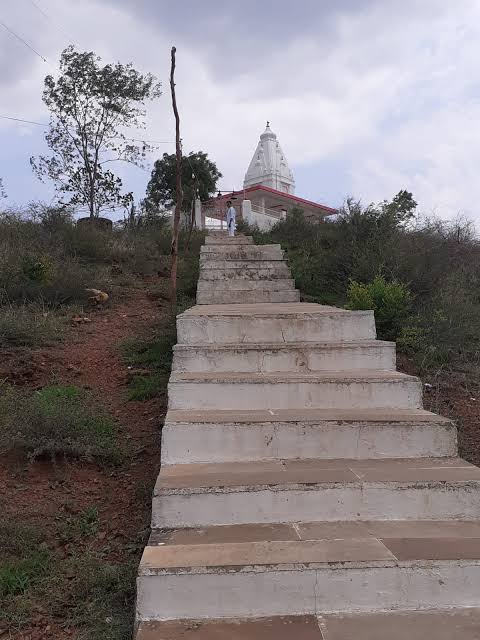
Shri Girgaon Wale Mahadev (Magistrate Mahadev)
★ Be the first to reviewAbout Shri Girgaon Wale Mahadev (Magistrate Mahadev)
Visiting hours: 6:00 AM - 8:30 PM
Girgaon Mahadev Temple Gwalior: History, Mahadev Ki Kacheri, Timings and Complete Travel Guide
Located around 15 to 16 kilometres from Gwalior city, Girgaon Mahadev Temple is one of the most fascinating and culturally significant Shiva temples in the Gwalior region of Madhya Pradesh. The temple is situated in the Girgaon area near Maharajpura and is known not only for its ancient Shiva shrine but also for a unique local tradition associated with justice and truth.
Unlike many other temples where devotees mainly visit for worship and blessings, Girgaon Mahadev is popularly known among local people as “Magistrate Mahadev” or “Mahadev Ki Kacheri” (Mahadev’s Court). For generations, people have believed that disputes brought before Lord Shiva should be settled with honesty and truth.
Devotees from different parts of the Gwalior-Chambal region, as well as nearby areas of Uttar Pradesh and Rajasthan, are known to visit the temple. Some come simply for darshan and prayers, while others visit because of the temple's unique association with resolving personal, family, property and financial disputes.
If you are planning to visit this lesser-known religious place in Gwalior, this guide covers its history, local traditions, temple timings, transportation, offerings, festivals and useful travel tips.
1. History and Religious Importance of Girgaon Mahadev Temple
Girgaon Mahadev Temple is believed by local residents to be a very old Shiva temple, with some local traditions describing it as nearly 1,000 years old. There are also references in local accounts connecting the temple's history with much earlier periods. However, the exact historical date of construction is difficult to establish without detailed archaeological or official historical records.
The ancient Shiva Lingam installed inside the temple is considered highly sacred by devotees. Many visitors come here with the belief that Lord Shiva listens to their problems and provides guidance and protection.
What makes this temple particularly interesting is its identity as “Mahadev Ki Kacheri.” The word “Kacheri” refers to a court or place where disputes are discussed. According to local tradition, people have been bringing serious disputes before Mahadev for generations.
The idea behind this tradition is simple: a person standing before Lord Shiva is expected to speak the truth. Local elders and temple representatives may act as witnesses or mediators, while devotees believe that the ultimate authority belongs to Mahadev.
This unique combination of faith, community tradition and dispute resolution has made Girgaon Mahadev different from an ordinary Shiva temple.
2. Why Is Girgaon Mahadev Known as “Mahadev Ki Kacheri”?
The most unusual feature of this temple is its association with the traditional concept of divine justice.
According to local belief, when two people are involved in a serious dispute, they may come to the temple and present their side of the matter before the Shiva Lingam. Such disputes can involve family matters, land and property, money transactions or other disagreements.
In traditional cases, a group of respected elders or local people may sit together and listen to both sides. The purpose is not to replace a legal court but to encourage the people involved to speak honestly and reach a peaceful settlement.
A large banyan tree in the temple premises is also associated with these traditional gatherings. The peaceful surroundings and religious atmosphere create a setting where both parties are encouraged to think carefully before making a statement.
The central belief is that truth should be spoken in front of Mahadev.
3. The Tradition of Taking an Oath Before Lord Shiva
One of the most talked-about traditions associated with Girgaon Mahadev is taking an oath before the Shiva Lingam.
When people come to the temple regarding a dispute, local tradition expects them to speak honestly in the presence of Lord Shiva. Devotees believe that a person who deliberately lies after taking an oath before Mahadev may eventually face negative consequences.
There are many stories shared by local residents about people who allegedly suffered financial, personal or other difficulties after making a false statement before the deity. Some stories even mention consequences appearing within a short period.
It is important to understand that these accounts are part of local faith and oral tradition, rather than scientifically established facts. Nevertheless, the belief is deeply rooted among many devotees and is one of the reasons the temple has developed its reputation as “Magistrate Mahadev.”
For visitors, the larger message of this tradition is about honesty, accountability and peaceful resolution of disputes.
4. Stories of Disputes Resolved at the Temple
Over the years, several stories have become popular among devotees regarding disputes that were reportedly settled at Girgaon Mahadev Temple.
Local accounts mention property-related disagreements, family disputes and financial matters. One frequently discussed story involves two brothers from Mumbai who reportedly had a dispute concerning around half a kilogram of gold.
There are also local stories about disputes involving valuable properties and large sums of money. In some cases, devotees are said to have made significant donations to the temple after their personal problems were resolved.
One such local account even mentions a devotee donating land worth more than one crore rupees after a major dispute was settled.
These stories are best understood as local narratives and traditions associated with the temple. They are part of the cultural identity of Girgaon Mahadev and help explain why people from outside the immediate area also know about this unusual shrine.
5. Girgaon Mahadev Temple Timings
The temple generally remains open for devotees during the day, allowing visitors to perform darshan and worship Lord Shiva.
The commonly followed timings are:
- Temple opening: Around 5:00 AM
- Morning worship and Mangala Aarti: After the temple opens
- Special occasions: During Sawan and major Shiva festivals, the temple may open earlier, sometimes around 4:00 AM
- Temple closing: Around 9:00 PM after the evening/Shayan Aarti
Timings can change during festivals, special religious occasions or other local arrangements. Therefore, visitors travelling from outside Gwalior should preferably confirm the day's timing locally before starting their journey.
For a first-time visitor, morning hours are generally a comfortable option because the weather is comparatively pleasant and the surrounding area is easier to navigate in daylight.
6. How to Reach Girgaon Mahadev Temple from Gwalior
Girgaon Mahadev Temple is located close to Gwalior and can be reached by road.
By Air
The nearest major airport is Rajmata Vijaya Raje Scindia Airport, Gwalior, located in the Maharajpura area.
The temple is relatively close to the airport area. Depending on the exact route and road conditions, the distance is approximately a few kilometres. Visitors arriving by flight can hire a taxi or local transport to reach the temple.
By Train
If you are travelling by train, Gwalior Junction Railway Station is the main railway station.
The temple is approximately 15 to 16 kilometres from the city centre and railway station area. From the station, visitors can use an auto-rickshaw, cab or other local transportation to travel towards Maharajpura and Girgaon.
By Road
For visitors travelling by their own car or motorcycle, the Maharajpura side of Gwalior is the main direction to follow.
The route towards Girgaon connects from the Gwalior-Bhind side. After leaving the main road, the road towards the temple becomes narrower in some sections. The final stretch passes through a more rural surroundings before reaching the temple premises.
Because the area is comparatively less urban than central Gwalior, using a map application and travelling during daylight can make the journey easier for first-time visitors.
7. What to Offer at Girgaon Mahadev Temple?
Like many traditional Shiva temples, worship at Girgaon Mahadev is generally simple and devotional.
Devotees commonly offer:
- Water or Gangajal
- Belpatra
- Dhatura
- Aak flowers
- Coconut
- Mishri
- Makhana
- Pedas or other simple sweets
Devotees may also perform Jalabhishek of the Shiva Lingam according to the temple's local worship practices.
Visitors should follow the instructions of the temple management regarding what can be offered directly to the Shivling and where offerings should be placed.
The atmosphere is generally more about faith and simplicity than elaborate rituals.
8. The Unique Tradition of Offering Bells
One of the most noticeable things inside the temple premises is the large number of bells offered by devotees.
According to local tradition, devotees may offer a bell when their wish is fulfilled or when an important personal problem is resolved. People associated with the “Mahadev Ki Kacheri” tradition may also offer bells after a dispute is settled.
As a result, visitors can see numerous bells hanging around the temple premises.
For many devotees, these bells represent gratitude. They are a symbolic way of thanking Lord Shiva after receiving what they consider divine help or blessings.
This tradition also adds a distinctive visual identity to Girgaon Mahadev Temple.
9. Bhandara and Food Arrangements During Festivals
Girgaon Mahadev Temple becomes particularly active during important Hindu festivals.
Sawan, especially Mondays during the holy month, attracts a large number of Shiva devotees. Mahashivratri is another major occasion when the temple can witness a significant increase in visitors.
During such occasions, local residents, devotees and temple organisers may arrange bhandaras for visitors. Depending on the event, devotees may be served traditional food such as puri, sabzi, halwa, boondi, khichdi and other prasad.
People who wish to organise a private bhandara, religious ceremony, Sundarkand path or Bhagwat-related programme should coordinate with the temple committee or local management in advance.
Arrangements may vary from one festival to another, so visitors should not assume that a particular facility will be available on every normal day.
10. Best Time to Visit Girgaon Mahadev Temple
The best time to visit depends on what kind of experience you want.
If your main purpose is peaceful darshan, normal weekdays are generally preferable. Tuesday to Saturday can be comparatively convenient for visitors who want to avoid the heavy crowds associated with Mondays and major religious occasions.
For devotees who want to experience the traditional Sawan atmosphere, visiting on a Monday during Sawan can be special. However, the number of visitors can increase considerably during this period.
Morning hours are also preferable for travellers, particularly because the surrounding area has a rural character.
If you are visiting for the first time, reaching the temple between approximately 8:00 AM and 4:00 PM can be a practical option.
11. Important Tips for Visitors
Before visiting Girgaon Mahadev Temple, keep a few simple things in mind.
1. Respect the religious traditions:
The temple is an important place of faith for local residents. Visitors should respect the worship practices and local customs.
2. Do not treat the temple as a replacement for a legal court:
The “Mahadev Ki Kacheri” tradition is based on local faith and community mediation. For serious legal matters involving property, money or criminal issues, visitors should also follow the appropriate legal process.
3. Prefer daytime travel:
Since some parts of the route are rural and less populated, daytime travel is more convenient for first-time visitors.
4. Check festival timings:
Temple timings and arrangements may change during Sawan, Mahashivratri and other special occasions.
5. Keep the temple premises clean:
Avoid throwing plastic, food wrappers or other waste around the temple.
6. Carry drinking water:
Especially during summer, the weather around Gwalior can become hot. Carrying drinking water is a good idea when travelling by bike or private vehicle.
12. Why Should You Visit Girgaon Mahadev Temple?
Girgaon Mahadev Temple is not simply another Shiva temple near Gwalior. Its identity has developed around a combination of religious faith, local history, community traditions and the fascinating story of “Mahadev Ki Kacheri.”
The belief that people should speak the truth before Lord Shiva has continued for generations and remains one of the most interesting aspects of the temple.
For travellers interested in religious places in Gwalior, ancient Shiva temples, local traditions and lesser-known destinations, Girgaon Mahadev can be an interesting addition to their itinerary.
The temple also offers a different experience from the more famous tourist attractions of Gwalior. Instead of being surrounded by a busy urban environment, the journey gradually takes visitors towards a quieter and more rural setting.
Whether you visit for darshan, to learn about the local tradition, or simply to explore a lesser-known religious place around Gwalior, Girgaon Mahadev provides an experience connected closely with the faith and traditions of the local community.
Frequently Asked Questions About Girgaon Mahadev Temple
Where is Girgaon Mahadev Temple located?
Girgaon Mahadev Temple is located in the Girgaon area near Maharajpura, Gwalior, Madhya Pradesh. It is approximately 15 to 16 kilometres from central Gwalior.
Why is Girgaon Mahadev called Magistrate Mahadev?
The temple is popularly called “Magistrate Mahadev” because of a local tradition in which people bring personal and community disputes before Lord Shiva and are expected to speak the truth.
What is Mahadev Ki Kacheri?
“Mahadev Ki Kacheri” literally means “Mahadev’s Court.” It refers to the local tradition of discussing disputes in the presence of Lord Shiva and community elders.
What can devotees offer to Lord Shiva?
Devotees commonly offer water, Gangajal, belpatra, dhatura, flowers, coconut, mishri and sweets. Visitors should follow the temple's local rules regarding offerings.
What are the temple timings?
The commonly followed timing is around 5:00 AM to 9:00 PM. During Sawan and major festivals, the schedule may change and the temple may open earlier.
Is Girgaon Mahadev suitable for a family visit?
Yes. Families can visit the temple for darshan and worship. Since parts of the route are rural, travelling during daylight is recommended, especially for first-time visitors.
When is the temple most crowded?
Mondays, Sawan Mondays and Mahashivratri are generally expected to be busier because of the large number of Shiva devotees visiting during these occasions.
Final Thoughts
Girgaon Mahadev Temple is one of those places where religion and local tradition come together in a particularly interesting way. The story of “Mahadev Ki Kacheri” has given this Shiva temple a unique identity among religious places around Gwalior.
The temple may not be as widely known as some of Gwalior's major tourist attractions, but its unique traditions make it worth knowing about. If you are planning a spiritual or cultural trip around Gwalior, consider adding Girgaon Mahadev to your list and experiencing the atmosphere for yourself.
Before travelling, it is always a good idea to verify the latest temple timings and local arrangements, particularly during festivals and special religious occasions.
Things to do
Ratings & Reviews
From visitors to Shri Girgaon Wale Mahadev (Magistrate Mahadev) who wrote on Khoj Juntion.
No reviews yet. Been here? Be the first to share your experience.
Visited Shri Girgaon Wale Mahadev (Magistrate Mahadev)? Your review helps other visitors.
Write a reviewMore places to visit in Gwalior
Plan a full day — these are close to Shri Girgaon Wale Mahadev (Magistrate Mahadev) or popular with visitors.


Planning a trip to Gwalior?
Day-by-day plan, trip budget and the best time to go.